World of Labshock — Lab Directory
Industrial Labs
Real OT environments. Real protocols. Each lab is a fully operational industrial system — not a simulation — running SCADA, PLC logic, and industrial network communication you can interact with, attack, and monitor.
 FreeFreeFree
 Free
Free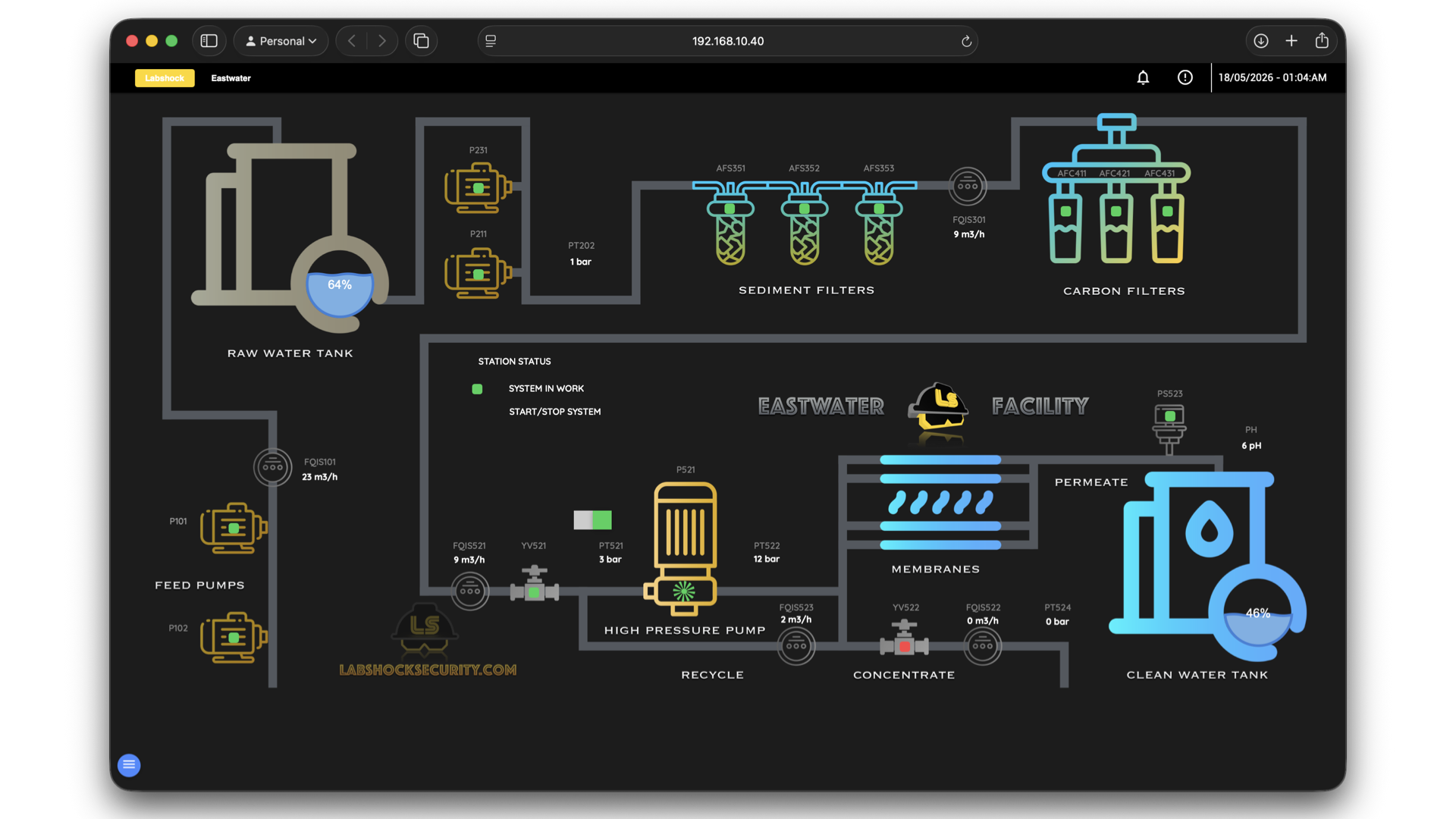 Free
Free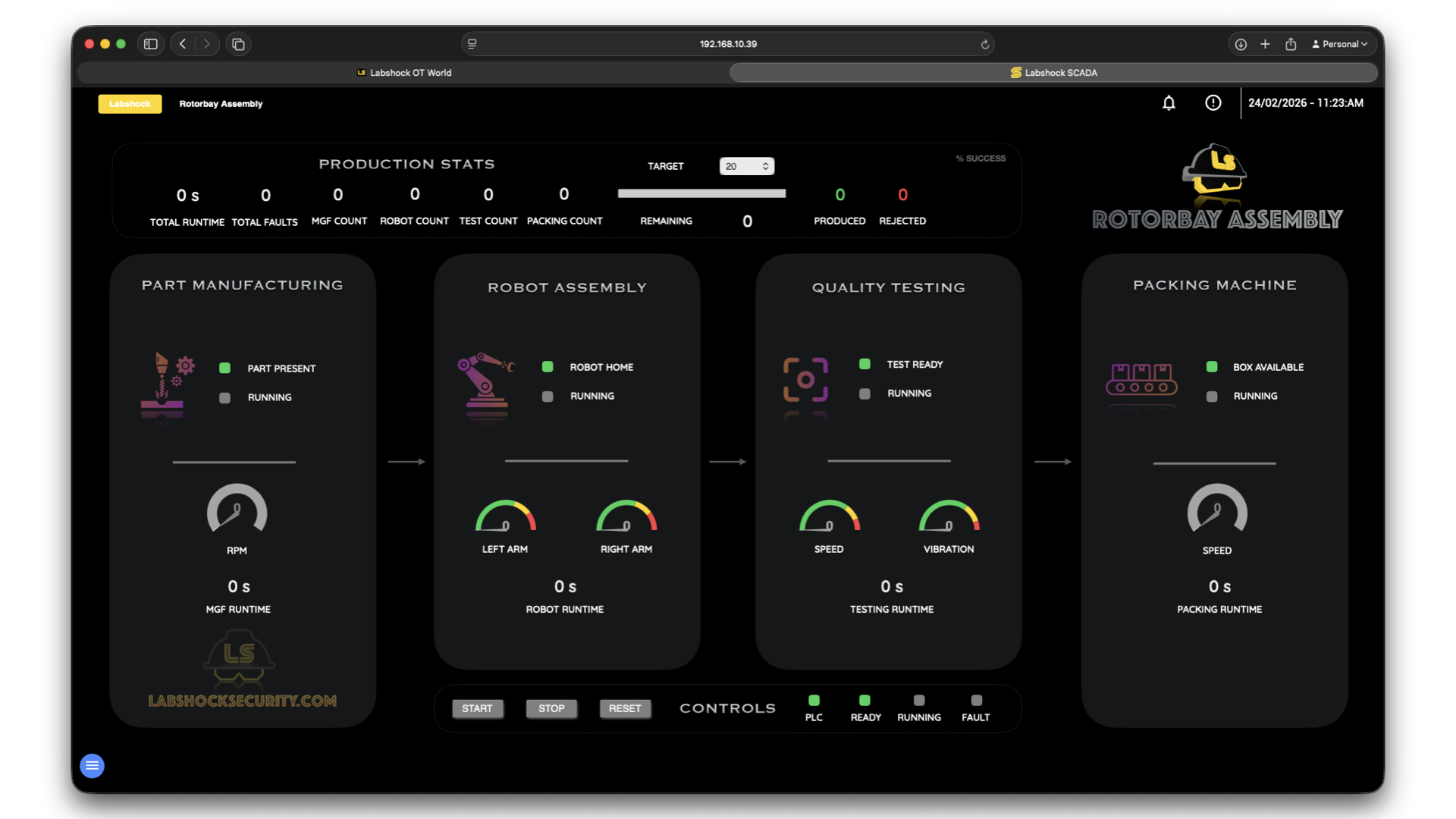 Pro
Pro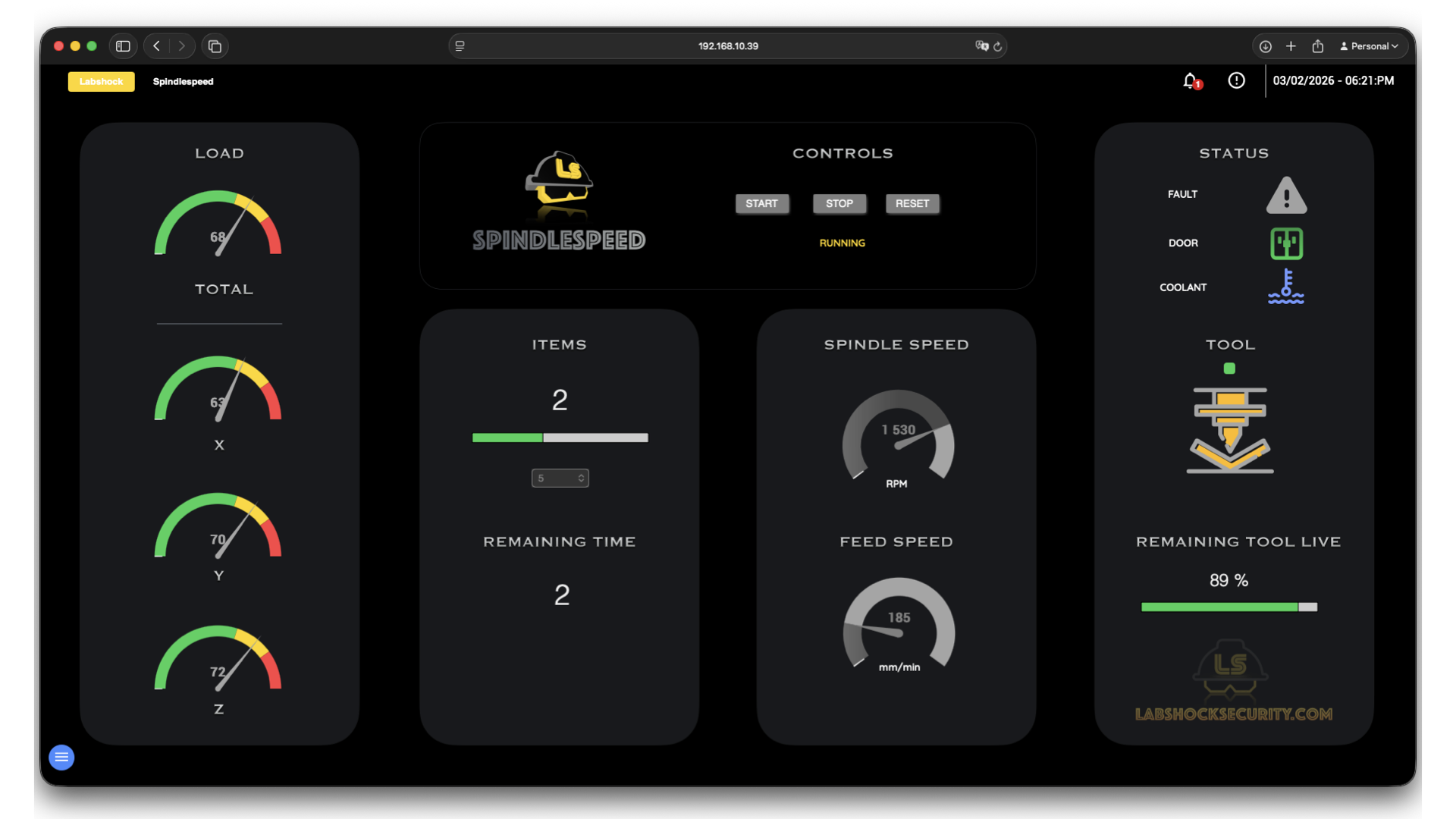 Pro
Pro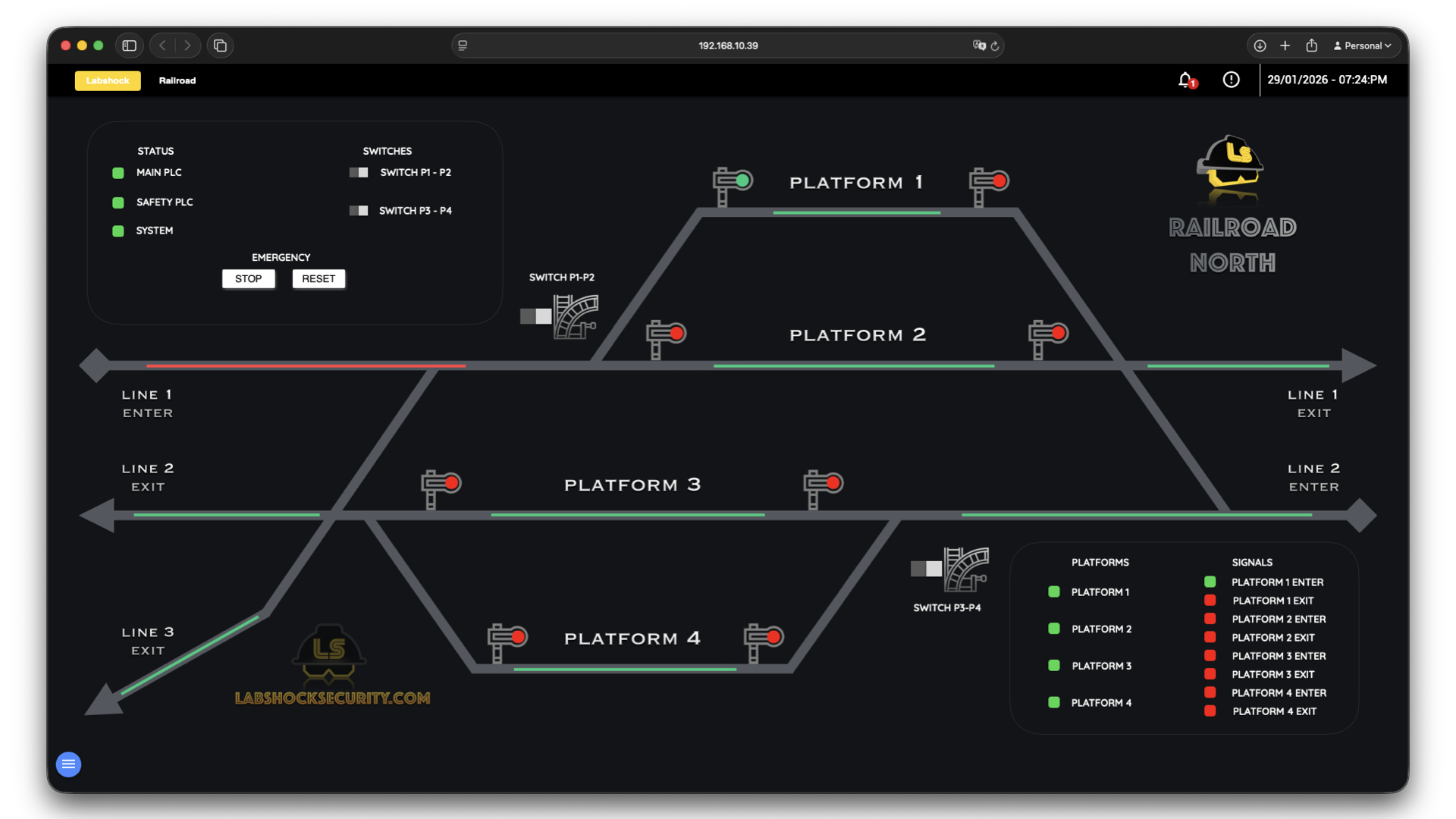 Enterprise
 Enterprise
9 LABS — OT SECURITY MUST BE TESTABLE, NOT DOCUMENTED
Oilsprings Air
Flat OT network. No segmentation. Full exposure.
Plan: free
Protocols: Modbus TCP
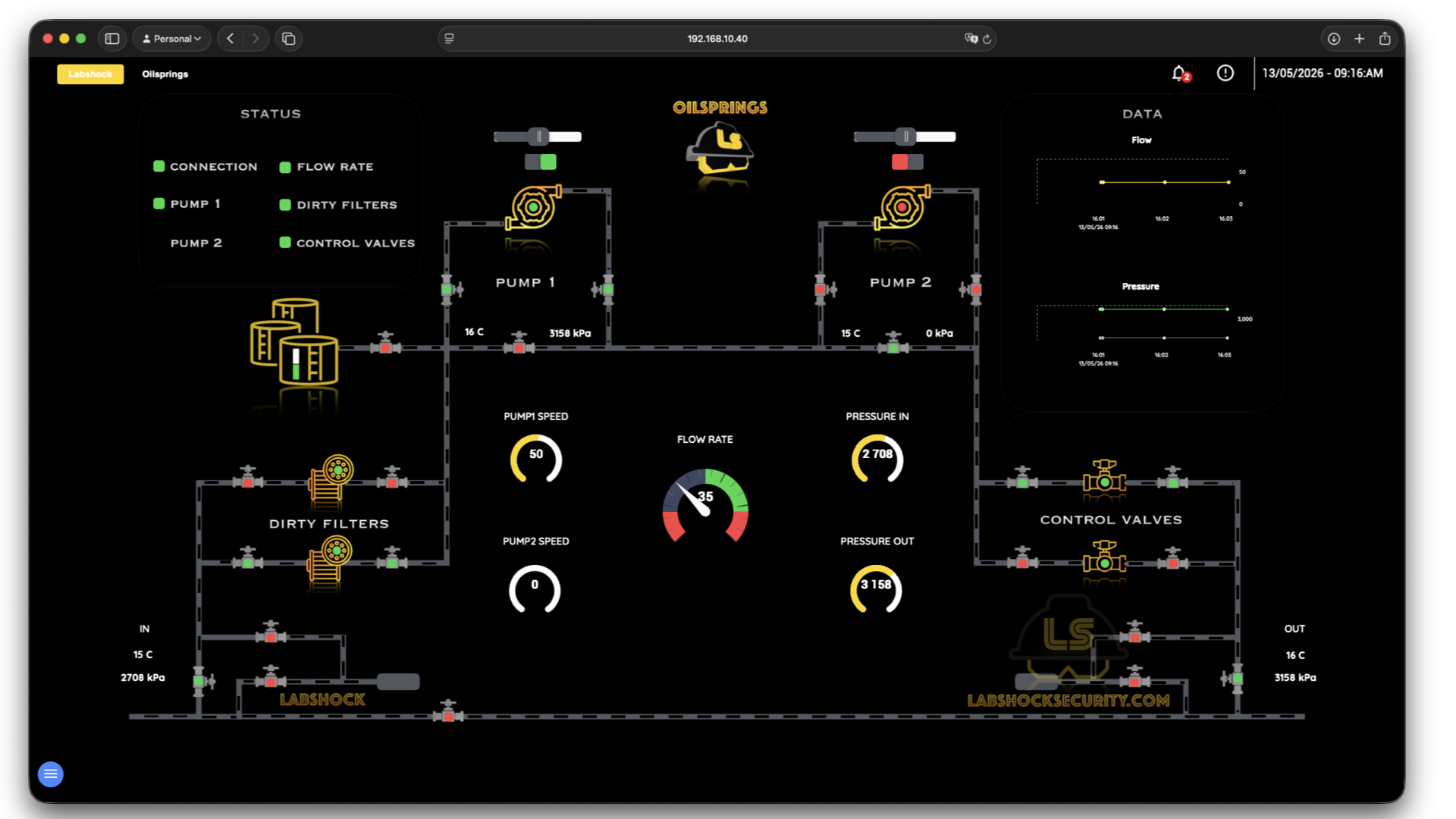
Oilsprings Air is a pure OT-focused industrial lab that simulates a flat, air-gapped control network. Oilsprings Air represents a simplified industrial control system with no DMZ or external IT integration, closely resembling legacy or poorly segmented OT environments. The lab contains a modified OpenPLC, SCADA, Engineering Workstation, Pentest Fury, Network Swiftness IDS and Tidal Collector, all connected through a basic router. Users can program PLC logic, observe SCADA interactions, capture and analyze OT traffic, practice protocol-aware attacks and see how logs and network events are generated in real time. Oilsprings Air is designed to teach core ICS concepts such as protocol behavior, asset visibility, baseline traffic patterns and why lack of segmentation increases risk.
Oilsprings Splunk
OT telemetry piped directly into Splunk.
Plan: free
Protocols: Modbus TCP, Syslog
Oilsprings Splunk extends the base Oilsprings environment with a full Splunk integration layer — routing real OT telemetry from PLC and SCADA systems into a production-grade SIEM pipeline. The lab adds a Splunk instance pre-configured to receive industrial event data from Tidal Collector. Every PLC state change, SCADA operator action, and IDS detection fires into Splunk in real time. Pre-built dashboards surface OT-specific views: process state, network anomalies, and control system events. Users can validate detection rules, build correlation searches against real industrial data, and test SOC workflows using events generated by actual Modbus traffic and PLC logic execution.
Oilsprings ELK
Open-source OT observability with Elasticsearch and Kibana.
Plan: free
Protocols: Modbus TCP, Syslog
Oilsprings ELK pairs the Oilsprings control environment with an open-source observability stack built on Elasticsearch, Logstash, and Kibana. Industrial telemetry from the PLC, SCADA, and IDS flows through Tidal Collector into Logstash pipelines, normalized and indexed into Elasticsearch. Kibana dashboards provide OT-specific visualization: protocol traffic volumes, PLC register changes, detection rule hits, and operator session timelines. The lab is designed for teams running open-source security stacks who need to validate industrial detection logic, build custom OT dashboards, or test log parsing pipelines against real ICS data.
Utility Works I
First structured lab in Loginward. Where OT security begins.
Plan: free
Protocols: Modbus TCP
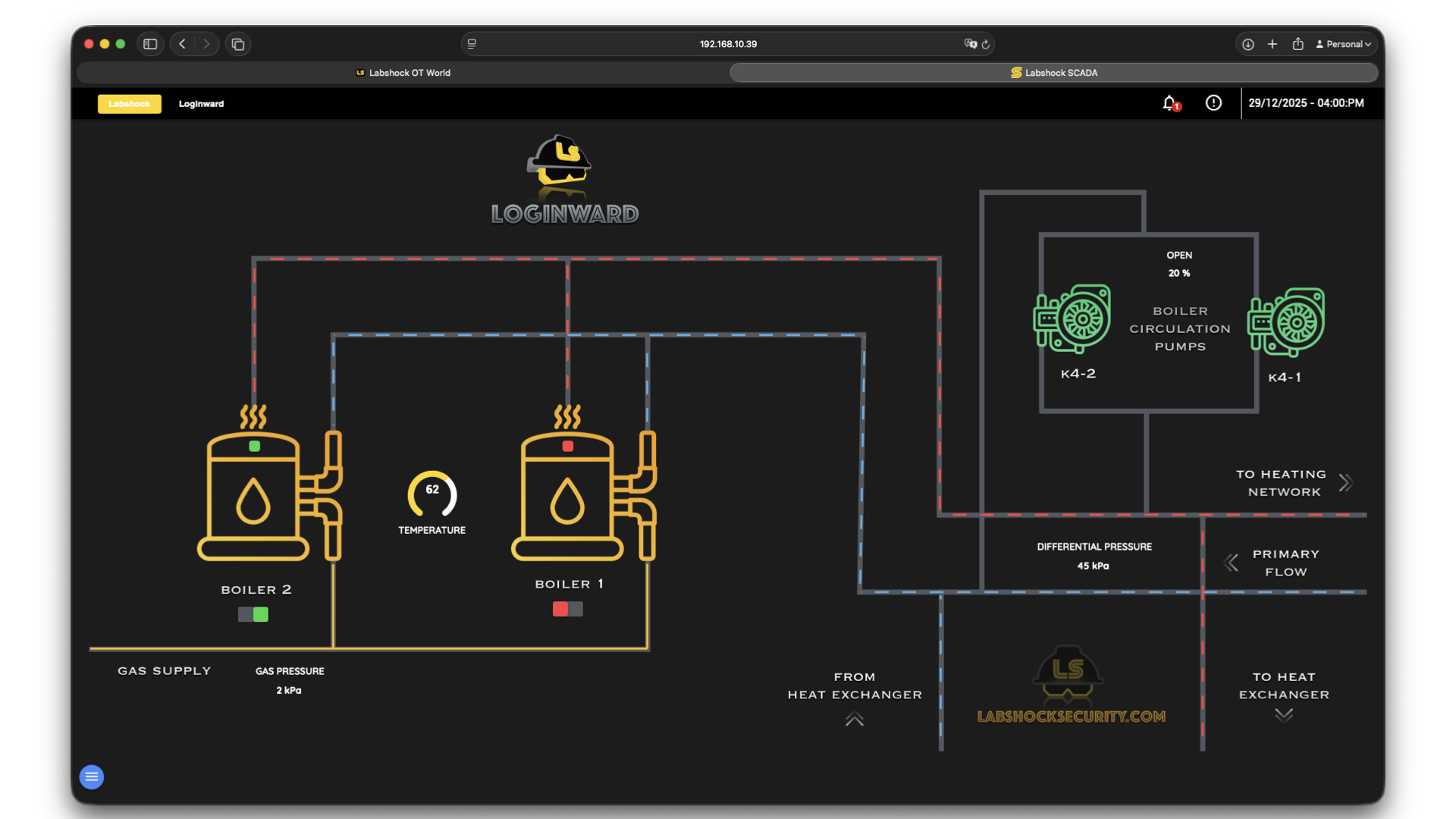
Utility Works I is the entry lab for the Loginward zone — the first structured industrial environment new operators encounter in the World of Labshock. Zone: Loginward. The lab models a small utility control station with a single PLC managing water flow regulation, a SCADA interface for monitoring, an Engineering Workstation for logic modification, and a network IDS capturing all traffic. No external connections. No IT network. Just the control system. Users complete guided objectives: read process values from the SCADA interface, identify active assets on the OT network, observe baseline Modbus traffic, and trigger a log event using the Engineering Workstation. Utility Works I establishes the vocabulary and observation skills required for every lab that follows.
Eastwater Facility
Water distribution control under active monitoring. Signalspire zone.
Plan: free
Protocols: Modbus TCP
Eastwater Facility is the primary lab for the Signalspire zone, modeling a water distribution control system with active network monitoring and SIEM integration. The environment introduces a basic industrial water system where a single PLC manages flow, pressure, and water quality. A simple HMI interface provides process visibility and control. Users are introduced to operational water infrastructure: starting and stopping processes, connecting to PLC systems via industrial protocols, and observing how sensor data is translated into control logic. Eastwater Facility marks the first step into water treatment systems, where every drop is governed by automation logic.
Rotorbay Assembly
Industrial protocol lab. Modbus at the register level.
Plan: pro
Protocols: Modbus TCP
Rotorbay Assembly is the core protocol lab for the Netfields zone, built specifically for hands-on interaction with Modbus TCP and industrial control sequencing at scale. The environment runs a fully automated rotor production line where mechanical systems operate in tightly synchronized motion. A Modbus-enabled PLC coordinates machining, shaft insertion, balancing, inspection, and packaging stages. A centralized HMI provides visibility into every phase of production, while underlying control logic operates through registers, coils, and deterministic sequencing. Users explore how industrial systems coordinate multi-stage production flows, how PLC logic governs physical machinery, and how Modbus communication behaves under continuous operational load. Rotorbay Assembly represents advanced industrial coordination where every register directly influences physical outcome.
Spindlespeed
Siemens S7 protocol interaction and control logic analysis.
Plan: pro
Protocols: Siemens S7comm
Spindlespeed is a precision machining lab within the Logicveil zone, focused on Siemens S7 communication and industrial control behavior in modern manufacturing systems. The environment simulates a CNC machining workshop where a PLC manages spindle rotation, feed rate, and tool positioning. A Siemens S7-compatible communication layer enables interaction with control logic and process variables. An HMI interface provides real-time visibility into RPM, load, and machining status, allowing users to observe how mechanical performance is directly tied to PLC logic execution. Users analyze spindle control behavior, monitor industrial protocol traffic, and study how manufacturing systems differ from traditional IT environments in timing, determinism, and control sensitivity. Spindlespeed introduces the intersection of precision engineering and industrial communication protocols.
Railroad North
Master-slave PLC architecture. Distributed transportation control.
Plan: enterprise
Protocols: Modbus TCP, Syslog
Railroad North is a specialized OT lab simulating a distributed railroad control environment with a master-slave PLC architecture. The lab features a realistic rail network where multiple PLCs coordinate track switching, signaling, and barrier control across distributed segments. Users can manipulate simulation switches to control track routing, observe signaling behavior, and analyze automation logic in real time. The environment includes integration with both OT and DMZ layers, enabling realistic segmentation between control systems and monitoring infrastructure. Data flows through collectors and DMZ components into centralized logging and observability systems. Railroad North supports hands-on exploration of multi-PLC coordination, industrial communication patterns, and distributed control logic across a transportation system.
Gasflow Terminal
26 services. Turbine logic. Full gas processing topology.
Plan: enterprise
Protocols: Siemens S7Comm, Syslog
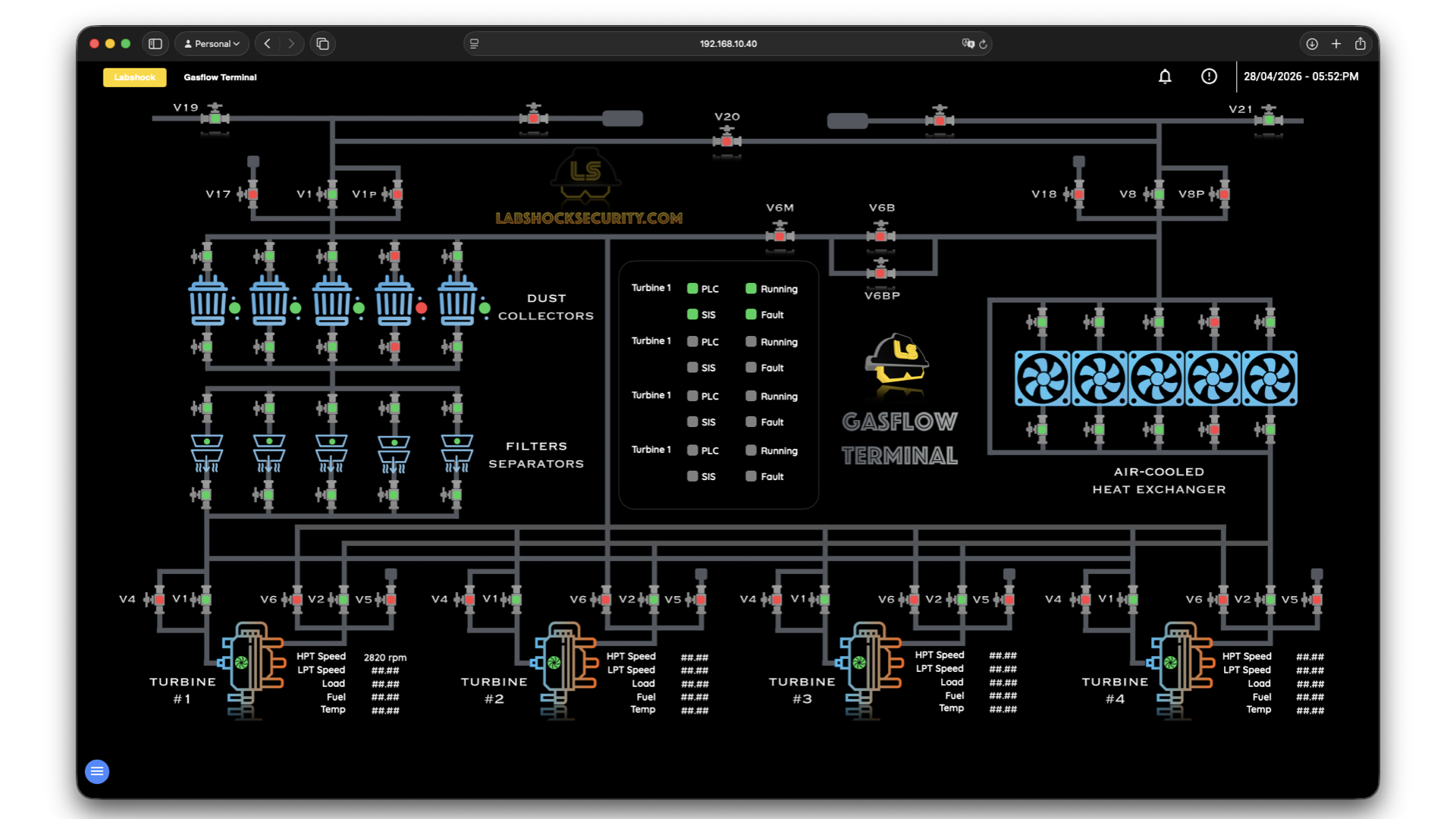
Gasflow Terminal is a large-scale industrial gas transport station simulation built around multiple turbine-driven compressor units. The environment models a distributed control architecture where each turbine operates with its own local PLC and HMI layer, while a central SCADA system aggregates telemetry, coordinates load balancing, and maintains system-wide stability. Users interact with a complex industrial topology that includes process control loops for combustion, rotation, airflow regulation, lubrication systems, and startup sequencing. The lab reflects real-world constraints such as redundant sensing, safety interlocks, and deterministic control cycles. Gasflow Terminal is designed to simulate enterprise-level industrial complexity, where multiple subsystems interact continuously under strict operational constraints.